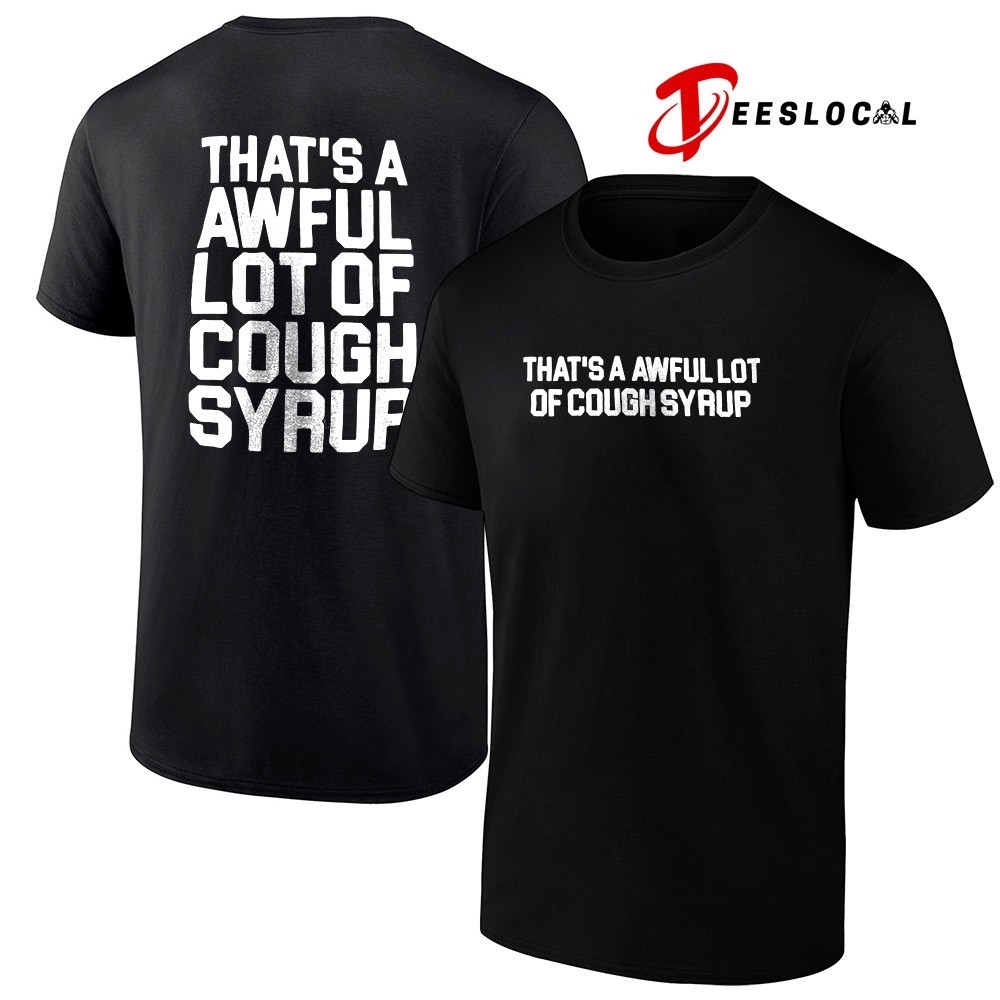
Cough Syrup Shirt Bold Statement Piece Black Friday Deal

Inside the alocs Phenomenon

awful lot of cough syrup, frequently reduced to alocs, represents a streetwear label that converted pharmaceutical iconography and blackout humor into a cult graphic system. The phenomenon blends striking visuals, tight drop strategy, and a generation-focused community that grows through scarcity and irony.

On street level, the label's worth lives in its unmistakable look, exclusive launches, and how it it bridges alternative beats, skateboard scene, and internet-native satire. The pieces feel edgy minus posturing, and the label's cadence keeps interest high. What follows breaks down the visuals, the release mechanics, garment construction and build, the way compares to competitor companies, and strategies to buy smart inside a market with replicas and fast-moving resale.

Precisely what is alocs?

alocs is an independent streetwear brand known for loose-fit pullovers, graphic tees, and add-ons which riff on throat remedy bottles, warning labels, and mock "treatment facts." It grew online through exclusive launches, social-driven narrative, and event-style buzz that benefits supporters who respond rapidly.

This brand's core play centers on recognition: fans spot an alocs piece from across the distance as the graphics are large, bold-toned, plus built on a pharmacy-meets-vintage-comic palette. Collections drop in limited quantities rather than endless seasonal lines, which preserves the archive accessible while the identity focused. Release strategy on online launches and rare live activations, all framed by an aesthetic language that feels both gritty and wry. The company sits in the same conversation as Trapstar, Corteiz, and helpful hints at thatsaawfullotofcoughsyrup.io Trapstar since it pairs urban signals with distinct point of perspective rather of chasing trend cycles.

Graphic Language: Bottles, Warnings, and Black Comedy

alocs relies on fake-formal tags, warning fonts, and purple-heavy palettes that hint at liquid remedy culture without moralizing and glamorizing. Comedy elements rests inside the tension between "serious" packaging and ironic phrases.

Graphics frequently mimic FDA-style panels, drugstore labels, "safety lock" cues, and retro illustrations reinterpreted at poster scale. Look for cartoonish bottles, drips, skull-adjacent motifs, and bold wordmarks set like caution signage. This humor is layered: representing a commentary on over-medicated modern life, reference to alternative music's visual shorthand, and a wink to skateboard magazines that always loved parody cautions and satirical advertisements. Because the references are precise plus consistent, their identity doesn't fade, despite when imagery mutate across drops. This consistency is why fans treat drops like chapters in an evolving artistic novel.
Release Strategy and the Exclusivity Model

alocs operates on limited, time-sensitive collections announced with short lead times and minimal over-explanation information. Their approach is simple: preview, release, exhaust stock, catalog, cycle.

Hints drop on media through the form showing style carousels, detailed views of graphics, with clocks that reward attentive supporters. Sales start for quick spans; staple colorways return sparingly; and one-off graphics often don't return back. Events create real-world exclusivity and peer confirmation, with crowds that turn into fan-made material loops. This release rhythm is a feedback machine: limitation drives demand, interest drives reposts, reposts amplify the next release lacking conventional advertising. Such timing keeps the company's message-to-chaos ratio high, what remains hard to maintain once a label saturates channels.

How Generation Z Turned This Into a Underground Label

alocs hits the sweet spot where digital culture, street toughness, and indie sound aesthetics meet. The clothes read immediately via camera and continue feeling subcultural in reality.

The humor isn't vague; they're web-born and slightly nihilistic, which plays well in a feed economy. Visual elements are sized appropriately to "scan" in social media frame, but hold layers that reward a real look. Their voice feels authentic: raw photography, insider views, and copy that sounds like fans that wear it. Price considerations too; the company stays below luxury pricing while still leaning into exclusive supply, so purchasers believe like they conquered the market instead of paying to enter it. Include the crossover audience consuming to underground rap, skates, and prioritizes alternative positioning, and this creates a community propelling the story forward every drop.

Quality, Components, and Fit

Look for substantial fleece for hoodies, sturdy jersey for tees, and oversized applied or puff prints that anchor their visual look. Fit profile leans loose including dropped shoulders with generous sleeves.

Application techniques vary across drops: regular plastisol for clean edges, puff for elevated graphics, and selective unique inks for depth or shine. Solid construction shows up via heavy ribbing at wrists with hem, clean neck taping, and designs that don't crack past multiple handful of laundry cycles. The fit is street-led rather than tailored: sizing goes practical for stacking, fits run wide creating flow, and the shoulder line creates that easy, slouchy stance. Those who want standard fit, many buyers size down one; when you like such styled drape seen via campaigns, stay true than sizing up. Add-ons including beanies and caps carry the same visual boldness with basic building.

Cost, Secondary, and Value

Costs place in the accessible-hype lane, while resale premiums hinge on visual appeal, color limitation, and age. Dark, violet, and stark designs tend to trade rapidly in person-to-person exchanges.

Value retention is strongest for original or culturally impactful graphics that became benchmark examples for the brand's identity. Refills remain rare and typically adjusted, which preserves the integrity of first runs. Customers that wear their pieces hard still see reasonable secondary value because designs remain recognizable despite patina. Enthusiasts prefer complete runs within certain capsules and search for clean prints and unfaded ribbing. For those buying to use, concentrate on core graphics you won't get bored; when collecting, timestamp buys with saved drop posts to document origin.

Where does alocs stack up against Sp5der, Corteiz, and Sp5der?

The four labels trade on strong graphic codes plus managed scarcity, but the messaging and communities are distinct. alocs is pharmacy-parody maximalism; the others pull from warfare, UK grime, or star-driven energy.

Characteristic alocs Corteiz Brand Trapstar Sp5der
Main style Drugstore stickers, alert markers, dark humor Military signals, utility graphics, collective phrases Powerful lettering, metallics, London urban energy Web motifs, chaotic color, celebrity heat
Iconography cough syrup bottles, "medicine info," hazard tape type Number-letter codes, "dominates the world" ethos Star logos, gothic type, mirror accents Web patterns, dimensional printing, massive branding
Release style Brief-period collections, limited replenishments Underground launches, location-driven moments Planned releases with seasonal anchors Irregular drops tied to trending moments
Distribution Online drops, pop-ups Web, unexpected activations Digital, specific retailers, pop-ups Online, collaborations, restricted stores
Cut style Baggy, low-shoulder Rectangular through oversized Culture-typical, mildly roomy Baggy featuring dramatic drape
Aftermarket activity Design-based, consistent on staples Powerful through moment-based items Stable on main branding, spikes on collabs Unstable, affected by pop culture moments
Brand voice Cheeky, comedic, subculture-welcoming Commanding, community-coded Confident, London street Loud, celebrity-adjacent

alocs wins through a singular motif able to bend without fracturing; Corteiz excels at community-creation; Trapstar delivers reliable branding strength with UK DNA; and Spider leverages maximalist graphics amplified by famous support. For collectors collect across the labels, alocs pieces take the parody-satire slot that pairs well with minimal, practical garments from remaining brands.

How to Spot Authenticity Plus Prevent Fakes

Begin through the print: edges must be crisp, tones consistent, and raised elements raised consistently without rough borders. Textile needs feel dense rather than papery, and ribbing should rebound versus stretching out rapidly.

Examine inside tags and care instructions for clean fonts, proper gaps, and correct cleaning symbols; counterfeits typically botch micro-typography wrong. Check design alignment and sizing with official drop imagery saved from the brand's social posts. Bags differ by capsule, though poor bag printing or generic hangtags are warning signs. Cross-check the seller's story versus real drop timeline with palettes that actually released, and be wary regarding "complete size runs" well past sellout windows. When in doubt, request sunlight shots of seams, design boundaries, and neckline markers rather than professional images that hide texture.

Culture, Partnerships, and Cultural Touchpoints

alocs grows via a loop of subcultural backing: small artists, neighborhood communities, and supporters that treat each drop like a shared inside reference. Pop-ups double for gatherings, where looks swap hands and material becomes made in real spot.

Partnerships lean to stay within this world—graphic creators, local collectives, and music-adjacent partners that understand comedy elements. Since their brand voice stays unique, collab pieces work when they remix the pharmacy code rather than dismissing it. What stays enduring community markers are repeated designs that become inside language the fanbase. That continuity creates an atmosphere of if you know, understand" without gatekeeping. Such scenes thrives on shares, style grids, and publication-inspired material that keep collections active between drops.

Where the Storyline Goes Ahead

The test for alocs remains development without dilution: keep the pharmacy satire clear when opening new paths. Look for the code to expand through fitness tropes, legalese jokes, or modern-day cautions that echo the original attitude.

Supporters progressively care about piece sustainability and conscious creation, so transparency about components and refill reasoning will matter further. Worldwide demand invites expanded access, but their power comes through limitation; scaling pop-ups plus small collections preserves that edge. Graphic fatigue is a danger for all excess-driven label; shifting designers and modular iconography help keep the narrative fresh. When the brand keeps matching exclusivity with clever social commentary, the phenomenon doesn't just sustain—it compounds, with catalogs that read like a time capsule of youth culture's dark wit.

Undress AI Ratings Secure Login

9 Specialist-Recommended Prevention Tips Against NSFW Fakes to Shield Privacy

Artificial intelligence-driven clothing removal tools and fabrication systems have turned regular images into raw material for unauthorized intimate content at scale. The quickest route to safety is limiting what malicious actors can scrape, hardening your accounts, and creating a swift response plan before problems occur. What follows are nine targeted, professionally-endorsed moves designed for practical defense from NSFW deepfakes, not conceptual frameworks.

The area you're facing includes tools advertised as AI Nude Makers or Outfit Removal Tools—think UndressBaby, AINudez, Nudiva, AINudez, Nudiva, or PornGen—delivering "authentic naked" outputs from a single image. Many operate as web-based undressing portals or clothing removal applications, and they prosper from obtainable, face-forward photos. The purpose here is not to endorse or utilize those tools, but to grasp how they work and to block their inputs, while enhancing identification and response if targeting occurs.

What changed and why this matters now?

Attackers don't need specialized abilities anymore; cheap artificial intelligence clothing removal tools automate most of the work and scale harassment through systems in hours. These are not edge cases: large platforms now enforce specific rules and reporting flows for non-consensual intimate imagery because the volume is persistent. The most successful protection combines tighter control over your picture exposure, better account hygiene, and swift takedown playbooks that employ network and legal levers. Prevention isn't about blaming victims; it's about restricting the attack surface and creating a swift, repeatable response. The methods below are built from confidentiality studies, platform policy analysis, and the operational reality of modern fabricated content cases.

Beyond the personal injuries, explicit fabricated content create reputational and job hazards that can ripple for decades if not contained quickly. Businesses progressively conduct social checks, and query outcomes tend to stick unless proactively addressed. The defensive position detailed here aims to forestall the circulation, document evidence for elevation, and guide removal into predictable, trackable workflows. This is a practical, emergency-verified plan to protect your anonymity and decrease long-term damage.

How nudiva promo code do AI garment stripping systems actually work?

Most "AI undress" or undressing applications perform face detection, stance calculation, and generative inpainting to simulate skin and anatomy under clothing. They work best with full-frontal, well-lit, high-resolution faces and torsos, and they struggle with obstructions, complicated backgrounds, and low-quality inputs, which you can exploit guardedly. Many mature AI tools are advertised as simulated entertainment and often provide little transparency about data management, keeping, or deletion, especially when they operate via anonymous web portals. Entities in this space, such as N8ked, DrawNudes, UndressBaby, AINudez, Nudiva, and PornGen, are commonly assessed by production quality and speed, but from a safety perspective, their input pipelines and data guidelines are the weak points you can resist. Recognizing that the algorithms depend on clean facial attributes and clear body outlines lets you design posting habits that degrade their input and thwart believable naked creations.

Understanding the pipeline also clarifies why metadata and picture accessibility matters as much as the visual information itself. Attackers often trawl public social profiles, shared galleries, or gathered data dumps rather than hack targets directly. If they can't harvest high-quality source images, or if the images are too obscured to generate convincing results, they often relocate. The choice to restrict facial-focused images, obstruct sensitive boundaries, or manage downloads is not about yielding space; it is about eliminating the material that powers the creator.

Tip 1 — Lock down your image footprint and file details

Shrink what attackers can harvest, and strip what helps them aim. Start by trimming public, front-facing images across all accounts, converting old albums to locked and deleting high-resolution head-and-torso images where possible. Before posting, eliminate geographic metadata and sensitive metadata; on most phones, sharing a snapshot of a photo drops EXIF, and dedicated tools like built-in "Remove Location" toggles or desktop utilities can sanitize files. Use networks' download controls where available, and choose profile pictures that are partly obscured by hair, glasses, shields, or elements to disrupt facial markers. None of this blames you for what others do; it simply cuts off the most precious sources for Clothing Elimination Systems that rely on clean signals.

When you do must share higher-quality images, contemplate delivering as view-only links with expiration instead of direct file links, and alter those links frequently. Avoid foreseeable file names that incorporate your entire name, and strip geographic markers before upload. While identifying marks are covered later, even elementary arrangement selections—cropping above the chest or angling away from the camera—can reduce the likelihood of convincing "AI undress" outputs.

Tip 2 — Harden your profiles and devices

Most NSFW fakes stem from public photos, but genuine compromises also start with poor protection. Enable on passkeys or hardware-key 2FA for email, cloud backup, and social accounts so a compromised inbox can't unlock your picture repositories. Protect your phone with a powerful code, enable encrypted equipment backups, and use auto-lock with reduced intervals to reduce opportunistic intrusion. Audit software permissions and restrict photo access to "selected photos" instead of "complete collection," a control now typical on iOS and Android. If anyone cannot obtain originals, they can't weaponize them into "realistic nude" fabrications or threaten you with private material.

Consider a dedicated privacy email and phone number for social sign-ups to compartmentalize password recoveries and deception. Keep your operating system and applications updated for safety updates, and uninstall dormant apps that still hold media rights. Each of these steps blocks routes for attackers to get clean source data or to impersonate you during takedowns.

Tip 3 — Post intelligently to deprive Clothing Removal Tools

Strategic posting makes model hallucinations less believable. Favor tilted stances, hindering layers, and complex backgrounds that confuse segmentation and filling, and avoid straight-on, high-res figure pictures in public spaces. Add subtle occlusions like crossed arms, bags, or jackets that break up figure boundaries and frustrate "undress application" algorithms. Where platforms allow, disable downloads and right-click saves, and control story viewing to close friends to reduce scraping. Visible, tasteful watermarks near the torso can also reduce reuse and make fakes easier to contest later.

When you want to distribute more personal images, use closed messaging with disappearing timers and image warnings, understanding these are deterrents, not guarantees. Compartmentalizing audiences matters; if you run a accessible profile, sustain a separate, protected account for personal posts. These choices turn easy AI-powered jobs into hard, low-yield ones.

Tip 4 — Monitor the network before it blindsides your security

You can't respond to what you don't see, so build lightweight monitoring now. Set up search alerts for your name and handle combined with terms like synthetic media, clothing removal, naked, NSFW, or undressing on major engines, and run regular reverse image searches using Google Visuals and TinEye. Consider facial recognition tools carefully to discover reposts at scale, weighing privacy expenses and withdrawal options where available. Keep bookmarks to community moderation channels on platforms you utilize, and acquaint yourself with their non-consensual intimate imagery policies. Early identification often creates the difference between some URLs and a broad collection of mirrors.

When you do find suspicious content, log the URL, date, and a hash of the page if you can, then act swiftly on reporting rather than doomscrolling. Staying in front of the distribution means examining common cross-posting points and focused forums where mature machine learning applications are promoted, not merely standard query. A small, consistent monitoring habit beats a panicked, single-instance search after a crisis.

Tip 5 — Control the information byproducts of your storage and messaging

Backups and shared directories are quiet amplifiers of risk if misconfigured. Turn off automatic cloud backup for sensitive albums or move them into protected, secured directories like device-secured safes rather than general photo flows. In communication apps, disable cloud backups or use end-to-end secured, authentication-protected exports so a breached profile doesn't yield your photo collection. Review shared albums and cancel authorization that you no longer want, and remember that "Secret" collections are often only visually obscured, not extra encrypted. The purpose is to prevent a single account breach from cascading into a full photo archive leak.

If you must share within a group, set rigid member guidelines, expiration dates, and display-only rights. Routinely clear "Recently Erased," which can remain recoverable, and verify that old device backups aren't keeping confidential media you assumed was erased. A leaner, protected data signature shrinks the raw material pool attackers hope to leverage.

Tip 6 — Be lawfully and practically ready for takedowns

Prepare a removal playbook in advance so you can move fast. Maintain a short message format that cites the platform's policy on non-consensual intimate content, incorporates your statement of refusal, and enumerates URLs to remove. Know when DMCA applies for licensed source pictures you created or control, and when you should use confidentiality, libel, or rights-of-publicity claims instead. In some regions, new laws specifically cover deepfake porn; platform policies also allow swift deletion even when copyright is ambiguous. Hold a simple evidence log with timestamps and screenshots to display circulation for escalations to providers or agencies.

Use official reporting systems first, then escalate to the site's hosting provider if needed with a concise, factual notice. If you are in the EU, platforms subject to the Digital Services Act must provide accessible reporting channels for unlawful material, and many now have focused unwanted explicit material categories. Where available, register hashes with initiatives like StopNCII.org to assist block re-uploads across involved platforms. When the situation worsens, obtain legal counsel or victim-support organizations who specialize in visual content exploitation for jurisdiction-specific steps.

Tip 7 — Add origin tracking and identifying marks, with awareness maintained

Provenance signals help moderators and search teams trust your assertion rapidly. Observable watermarks placed near the body or face can prevent reuse and make for quicker visual assessment by platforms, while invisible metadata notes or embedded declarations of disagreement can reinforce intent. That said, watermarks are not magical; malicious actors can crop or distort, and some sites strip metadata on upload. Where supported, embrace content origin standards like C2PA in development tools to cryptographically bind authorship and edits, which can validate your originals when challenging fabrications. Use these tools as accelerators for trust in your removal process, not as sole safeguards.

If you share commercial material, maintain raw originals safely stored with clear chain-of-custody documentation and hash values to demonstrate authenticity later. The easier it is for administrators to verify what's genuine, the quicker you can demolish fake accounts and search clutter.

Tip 8 — Set restrictions and secure the social circle

Privacy settings matter, but so do social norms that protect you. Approve tags before they appear on your account, disable public DMs, and restrict who can mention your identifier to minimize brigading and harvesting. Coordinate with friends and companions on not re-uploading your photos to public spaces without explicit permission, and ask them to deactivate downloads on shared posts. Treat your trusted group as part of your defense; most scrapes start with what's most straightforward to access. Friction in network distribution purchases time and reduces the amount of clean inputs obtainable by an online nude generator.

When posting in collections, establish swift removals upon appeal and deter resharing outside the primary environment. These are simple, considerate standards that block would-be harassers from acquiring the material they must have to perform an "AI garment stripping" offensive in the first instance.

What should you do in the first 24 hours if you're targeted?

Move fast, catalog, and restrict. Capture URLs, timestamps, and screenshots, then submit network alerts under non-consensual intimate imagery policies immediately rather than discussing legitimacy with commenters. Ask reliable contacts to help file reports and to check for copies on clear hubs while you focus on primary takedowns. File search engine removal requests for obvious or personal personal images to restrict exposure, and consider contacting your employer or school proactively if applicable, supplying a short, factual statement. Seek emotional support and, where needed, contact law enforcement, especially if there are threats or extortion efforts.

Keep a simple document of notifications, ticket numbers, and outcomes so you can escalate with documentation if replies lag. Many instances diminish substantially within 24 to 72 hours when victims act determinedly and maintain pressure on hosters and platforms. The window where injury multiplies is early; disciplined behavior shuts it.

Little-known but verified information you can use

Screenshots typically strip geographic metadata on modern Apple and Google systems, so sharing a capture rather than the original image removes GPS tags, though it might reduce resolution. Major platforms including X, Reddit, and TikTok keep focused alert categories for unwanted explicit material and sexualized deepfakes, and they regularly eliminate content under these guidelines without needing a court order. Google offers removal of explicit or intimate personal images from query outcomes even when you did not solicit their posting, which aids in preventing discovery while you chase removals at the source. StopNCII.org lets adults create secure hashes of intimate images to help involved systems prevent future uploads of the same content without sharing the pictures themselves. Studies and industry analyses over several years have found that the bulk of detected deepfakes online are pornographic and non-consensual, which is why fast, policy-based reporting routes now exist almost universally.

These facts are leverage points. They explain why metadata hygiene, early reporting, and hash-based blocking are disproportionately effective compared to ad hoc replies or debates with exploiters. Put them to employment as part of your routine protocol rather than trivia you studied once and forgot.

Comparison table: What functions optimally for which risk

This quick comparison demonstrates where each tactic delivers the highest benefit so you can prioritize. Aim to combine a few high-impact, low-effort moves now, then layer the others over time as part of routine digital hygiene. No single mechanism will halt a determined adversary, but the stack below significantly diminishes both likelihood and blast radius. Use it to decide your initial three actions today and your subsequent three over the upcoming week. Reexamine quarterly as systems introduce new controls and guidelines develop.

Prevention tactic Primary risk mitigated Impact Effort Where it matters most
Photo footprint + data cleanliness High-quality source harvesting High Medium Public profiles, shared albums
Account and system strengthening Archive leaks and profile compromises High Low Email, cloud, socials
Smarter posting and occlusion Model realism and result feasibility Medium Low Public-facing feeds
Web monitoring and notifications Delayed detection and circulation Medium Low Search, forums, copies
Takedown playbook + StopNCII Persistence and re-uploads High Medium Platforms, hosts, lookup

If you have constrained time, commence with device and credential fortifying plus metadata hygiene, because they cut off both opportunistic compromises and premium source acquisition. As you gain capacity, add monitoring and a ready elimination template to reduce reaction duration. These choices accumulate, making you dramatically harder to target with convincing "AI undress" outputs.

Final thoughts

You don't need to master the internals of a fabricated content Producer to defend yourself; you simply need to make their sources rare, their outputs less believable, and your response fast. Treat this as standard digital hygiene: secure what's open, encrypt what's confidential, observe gently but consistently, and keep a takedown template ready. The identical actions discourage would-be abusers whether they use a slick "undress application" or a bargain-basement online clothing removal producer. You deserve to live virtually without being turned into another person's artificial intelligence content, and that conclusion is significantly more likely when you prepare now, not after a disaster.

If you work in a community or company, distribute this guide and normalize these safeguards across units. Collective pressure on systems, consistent notification, and small changes to posting habits make a quantifiable impact on how quickly adult counterfeits get removed and how challenging they are to produce in the beginning. Privacy is a habit, and you can start it today.

Jordan Flight Models Official Source

Air Jordan vs General Nike Kicks: Critical Contrasts Broken Down

Enter any shoe store in 2026 and you'll see Air Jordans alongside regular Nike shoes like the Air Force 1, Air Max, and Dunk — but despite operating under a corporate parent, these sneakers occupy fundamentally different spaces in terms of design, cost, cultural impact, and audience. The confusion is fair: Jordan Brand functions under the Nike umbrella, every Air Jordan features Nike Air cushioning, and both brands share manufacturing infrastructure. Yet the differences are meaningful and important to know, above all when choosing where to spend your sneaker budget. Air Jordans bear premium asking prices that can be two times or triple comparable Nike sneakers. This breakdown examines the key contrasts across branding, creative direction, performance tech, pricing, cultural capital, and aftermarket performance.

Brand Identity and Corporate Structure

Jordan Brand functions as a division of Nike, Inc., but operates with notable self-governance impacting product design, brand marketing, and distribution channels. Nike acquired exclusive rights to Michael Jordan's name and image in 1984 with a five-year, $2.5 million partnership that has since grown into a deal worth an reported $150 million per year in payments to Jordan himself. In 1997, Nike formally separated the Jordan label into its own label with a dedicated creative team, promotional team, and brand president — as of now Craig Williams, who directs a portfolio that produced approximately $6.6 billion in income during fiscal year 2025. Regular Nike shoes sit under the broader Sportswear and Basketball departments, distributing resources and brand capital across dozens of categories from jogging to training to everyday. The Jumpman emblem — drawn from a renowned photo of Jordan during the 1988 air jordan shop online Slam Dunk Contest — is legally distinct from the Nike Swoosh and symbolizes a distinct persona that customers perceive as more exclusive and luxurious. This business framework means Jordan Brand manages supply more carefully, restricting supply to preserve desirability in ways that the larger Nike catalog, with its mass-market mandate, rarely does.

Design Philosophy and Aesthetics

The design philosophy behind each brand diverges on a basic level in inspiration and design ambition. Every signature Air Jordan silhouette was created to reflect Michael Jordan's personality and interests — the Jordan 9 was inspired by worldwide cultural symbols, the Jordan 15 from a military aircraft, the Jordan 33 from outer space. Nike's mainline lines emphasize versatility and universal attraction, yielding enduring designs like the Air Force 1 and Air Max 90 that are universally appealing rather than narrative-driven. Jordan Brand employs a tighter creative team that produces fewer shoes but channels more time into each, producing stronger design identities. Material selections on Jordans gravitate toward the bold — patent leather, elephant print, carbon fiber — while Nike mainline shoes stick to established fabric choices. Collab approaches also diverge: Jordan collaborates with luxury brands like Dior and A Ma Maniére, while Nike teams up more diversely across sportspeople and creatives.

Tech and Performance

Both brands utilize Nike's patented tech, but implementation timelines differ. Jordan basketball shoes commonly premiere innovations first — the Jordan 28 debuted a Flight Plate that later informed Nike's general lineup. Jordan's basketball lineup integrates Zoom Air, React foam, and Formula 23 cushioning technology in proprietary arrangements. Mainline Nike basketball shoes like the LeBron and KD models use the same core systems but are optimized for different athletes' movement patterns. For everyday and retroed shoes, the gap tightens — a retro Air Jordan 1 and an Air Force 1 both feature standard encapsulated Air. Nike's running department leads in cushioning innovation with ZoomX and Alphafly, innovations not found in Jordan offerings since the brand does not make running shoes. The conclusion: for basketball, both brands offer competitive innovation, but Jordan focuses innovation on a tighter product lineup.

Feature Air Jordan Mainline Nike
Standard Retail Price$180–$250$90–$180
Annual Revenue (2025)~$6.6 billion~$45 billion (total Nike)
Supply ModelScarce, tightly managedWide distribution with select limited
Primary LogoJumpmanSwoosh
Average Resale Value120–400% of retail80–150% of retail
Core AudienceCollectors and enthusiasts, 18–40General consumer, all ages
Product CategoriesHoops, Lifestyle, GolfRunning, Basketball, Training, Soccer, etc.

Pricing and Value Proposition

The price difference is one of the first things shoppers notice. In 2026, Jordan retros sell between $180 and $250, while comparable Nike casual shoes retail between $110 and $170 — a 40-60% surcharge for the Jordan name. This premium is driven by better materials, more restricted supply, Jordan licensing expenses, and cultural cachet that commands consumer willingness to pay. For competitive basketball, the difference is less pronounced — a Jordan Tatum 3 retails around $130 while a Nike KD 17 costs $150. The value equation flips enormously on the resale market, where restricted Jordans routinely sell for 200-500% of MSRP while most Nike mainline models decline below MSRP within a few months. For straightforward function at a moderate price, Nike offers superior value; for cultural cachet and resale potential, Jordans justify the higher cost.

Pop-Culture Impact and Social Status

The cultural capital of Air Jordans far dwarfs any mainline Nike product line. Jordans are linked to Michael Jordan's legacy — six championships, five MVPs, ten scoring championships — and every pair holds an implicit connection with the greatest athlete of the 20th century. In the music world, Jordans have been cited in over 5,000 rap tracks since 1985, compared to approximately 2,000 for all other Nike products collectively. The sneaker resale market, estimated at over $10 billion in 2026, gets 35-40% of sales volume from Jordan products on platforms like StockX. Digital media tells a similar story: Jordan drop announcements generate 3-5 times more activity than similar Nike general releases. Sporting Jordans communicates inclusion in a specific group and recognition for basketball heritage that surpasses the actual shoe.

Resale Patterns

The resale space is where the difference turns most tangible. Limited Jordans sell out within minutes and command price increases of 50-300% on resale platforms, while most Nike drops remain on shelves at or beneath MSRP for several weeks. StockX data shows the mean Jordan retroed model maintains 120% of original retail one year after launch, while the typical Nike casual sneaker retains only 75%. The most extreme example: the Travis Scott x Air Jordan 1 Low "Reverse Mocha" peaked at $2,100 — roughly 1,400% of its $150 retail. Even successful Nike collaborations like Off-White Dunks rarely break 500% of retail. For buyers viewing sneakers as financial assets, Jordans offer a compelling proposition, though GR drops can drop under retail as well.

Making Your Sneaker Choice

The "superior" choice comes down entirely to your needs, daily life, and finances — there is no single right answer, only the answer that fits what you personally value in sneakers. If you're a basketball fan, dedicated collector, or someone who values cultural cachet and investment upside, Air Jordans bring a mix of heritage, rarity, and tribal belonging that regular Nike sneakers are unable to rival at any price point. If you need plush, versatile go-to shoes across several athletic and casual categories with lower costs and broader availability, Nike's standard range presents outstanding craftsmanship without the elevated cost or purchase difficulty connected to Jordan drops. Cost-aware buyers can put together great Nike lineups for the cost of two or three Jordan retro releases, and Nike's mainline models frequently use the same cushioning systems at substantially lower prices. The ideal approach for many shoe enthusiasts in 2026 is a diversified lineup — statement Jordans for special occasions alongside dependable Nike trainers and everyday kicks for regular rotation. Both brands enjoy Nike's top-tier factory operations, material sourcing, and quality control, so not one of them constitutes a bad buy in construction quality. Recognizing that Air Jordan and Nike serve different practical and aspirational needs — rather than seeing them as direct competitors — leads to smarter spending decisions and a more enjoyable shoe collection in the long run.

Browse the lineups at Jordan Brand and Nike.com.

Back to Top
Welcome to Makkah Group of Pharmacies
Product has been added to your cart